Dry ice during harvest
Why use dry ice during harvest
Dry ice and carbonic snow to protect grapes from the vineyard to crushing
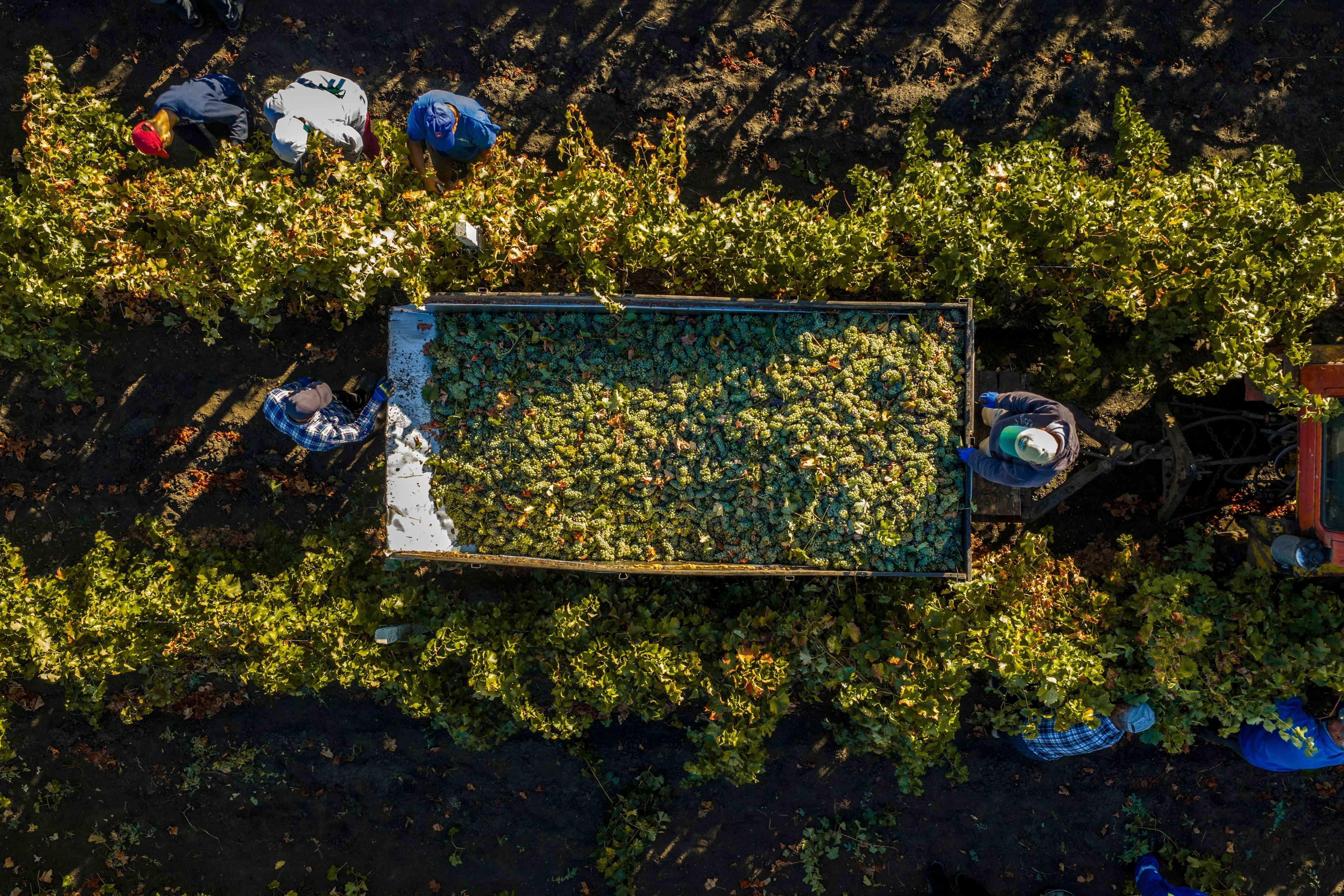
rom transport to the winery and receiving hoppers through to destemming and crushing, every contact with air exposes crushed grapes to rapid oxidative processes that require sulphur dioxide-based corrective measures. Carbon dioxide in solid form, as dry ice pellets or carbonic snow, creates low-oxygen protective atmospheres at every critical point in the process, reducing the use of SO₂ in the winery.
1
Protection at every critical point of the harvest
2
Manual pellets or automated carbonic snow
3
Harvesting with less sulphur dioxide
Products and services for dry ice during harvest
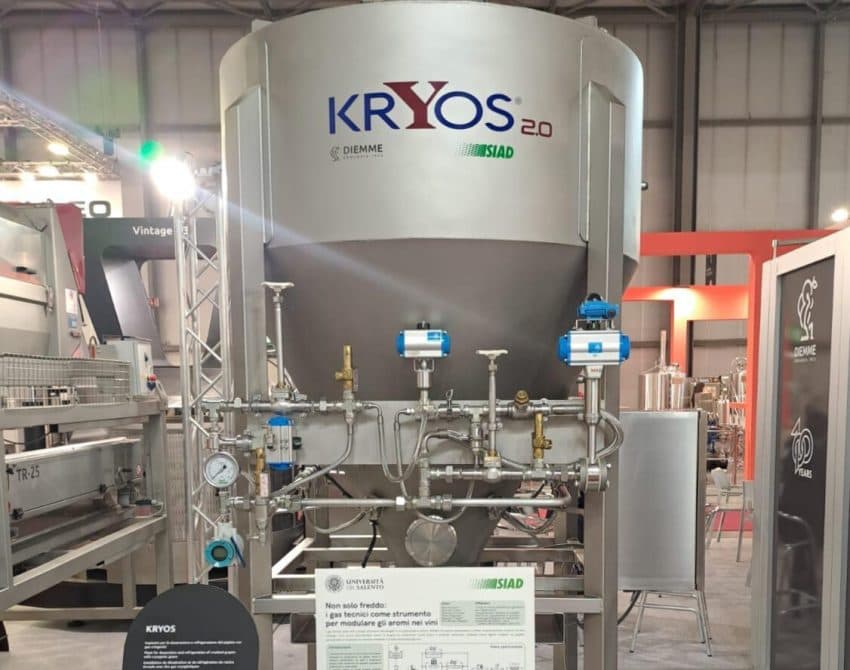
SIAD supplies solid CO₂ in pellets, liquid CO₂ for producing carbonic snow in the winery, and logistics services dedicated to the tight timing of the harvest campaign, with delivery within 48 hours of the order and delivery planning.
Dry ice pellets for protective atmospheres in the winery
Solid carbon dioxide pellets are produced at the plant and delivered to the winery in 15 kg boxes or 100 kg insulated containers, ready to use. They are distributed manually over the grapes in transport trailers, receiving tanks and during destemming-crushing: as they sublime, they form a low-oxygen protective atmosphere with a consumption of 0.5–1.0 kg per quintal of processed crushed grapes. The 3 mm particle size is preferred because it minimises the risk of cold burns on the skins.
Carbonic snow for automated applications
For wineries with large-scale continuous production, carbonic snow is produced directly on site with SIAD snow generators using liquid CO₂ from a cryogenic tank, with yields of up to 400 kg/h. Dispensing is controlled by solenoid valves connected to the operation of the destemmer-crusher or transfer pumps, ensuring continuous protection.
Liquid carbon dioxide from cryogenic tank
To produce carbonic snow efficiently, it is essential to draw liquid CO₂ from a cryogenic tank: approximately 2.5 kg of liquid CO₂ are needed for 1 kg of snow, compared with the 4–5 kg required when starting from cylinders. SIAD cryogenic supply is sized according to the flow rates required by the winery and managed on an ongoing basis.
Gas always available with Flexigas
Flexigas is SIAD’s highly flexible service that guarantees the continuous availability of liquid gas, with constant delivery characteristics that can adapt to harvest consumption peaks. The winery works without interruptions even on days of maximum demand.
Contact us
Are you planning the harvest?
Our experts choose the solid CO₂ format best suited to your plant, size consumption and logistics, and support you in handling gas safely at every stage of your winemaking process.
Related Applications
Other SIAD applications for the wine production chain
Discover the related solutions best suited to your winemaking process