Additive Manufacturing
Why Additive Manufacturing
Metal 3D Printing
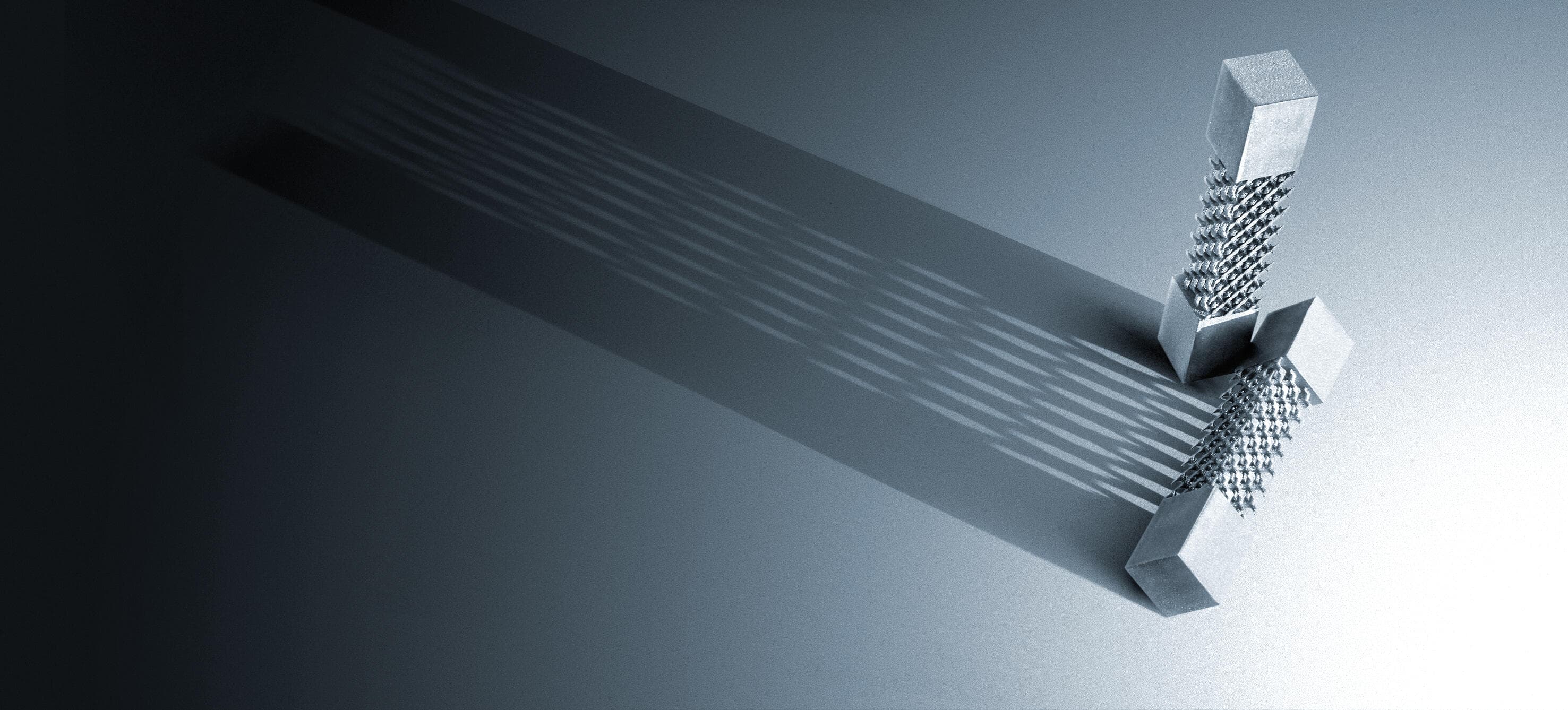
Additive Manufacturing is a process that starts from a CAD model and creates a 3D object using different techniques. The use of a high-purity shielding gas prevents the molten metal from coming into contact with elements present in the air, such as oxygen, humidity, and contaminants.
1
Surface oxidation and delamination prevented
2
Porosity and moisture-related defects reduced
3
Components with superior mechanical properties
Products and services for Additive Manufacturing
High-purity gases are available for every stage of the supply chain: argon and nitrogen for Powder Bed Fusion processes, helium for Electron Beam Melting, and argon for both direct deposition (DMD) and powder atomization. The offering is completed by the SIAD Cabinet for storing powders in a controlled atmosphere.
High-purity Argon and Nitrogen
In Powder Bed Fusion processes (SLS, SLM, and DMLS), a laser beam selectively melts layers of metal powder. The chamber is purged with inert gas before printing until oxygen levels fall below 300 ppm. Argon is mandatory for reactive materials such as titanium and Inconel, while nitrogen is the standard choice for stainless steel, cobalt-chromium alloys, and polymers.
Helium for EBM processes
In Electron Beam Melting processes, the system operates under vacuum at pressures below 1×10⁻⁵ mbar. During melting, small quantities of helium (4 l/hour) are introduced into the chamber until a partial pressure of 2×10⁻³ mbar is reached. Thanks to its high thermal conductivity, helium promotes heat dispersion across the powder bed and dissipates electrostatic charge from the surface of the melt.
Powder storage in a controlled atmosphere
SIAD Cabinet is designed for storing atmosphere-sensitive metal and polymer powders. Once closed, it activates an internal nitrogen flow to reduce humidity and oxygen levels below the established threshold. The integrated display enables real-time parameter monitoring, while the USB connection allows historical data to be exported for process traceability.
Contact us
Do you work with Additive Manufacturing?
Our experts support you in choosing the high-purity gas best suited to your printing process, with dedicated technical consulting and guaranteed supplies.
Related Applications
Other applications for metal processing
Discover the related solutions best suited to your production process